
"Japanese side jobs"
80 article(s) found

Siphon pot to make coffee 7 elements, how many do you know?
After a brief understanding of the basic process of the game style, you may still be confused about some of the details, so you might as well review the key tips for each step. PIONT1: before the upper pot filter fastens the glass tube to boil the wind, first put the wrapping cloth on the filter and put it into the upper pot to smooth it, then pull out the spring bead buckle ring hanging from the glass tube mouth of the upper pot and fasten the pipe mouth. Many beginners forget this.

How does the coffee roaster work? What are the types of coffee roasters? Direct fire, semi-direct fire, heat
Professional coffee knowledge exchange more coffee bean information please follow the coffee workshop (Wechat official account cafe_style) coffee roaster working principle? What are the types of coffee roasters? What's the difference between direct fire, semi-direct fire and hot air? One pot, two beans, three baking. In this sentence, the factors that affect roasting coffee are pointed out. Pot, which is used to bake coffee.

Turkish coffee, return to "traditional and sensual" coffee flavor of cinnamon and cardamom
I'm a technology and numbers nerd, and my biggest fear is people asking me scary questions like the model of the coffee machine or the altitude of the beans. I like to touch the world in an emotional way, including coffee, so I'm attracted to objects that look and feel beautiful and textured, and I like stories rather than data in an approach to knowledge.

Darjeeling Black Tea Manor | which manor is good? Musk Black Tea varieties of Castleton Manor
Musk tea may mean more to the rest of the world than to Darjeeling. The charm of tea lies largely in the belief that its taste is even comparable to that of red wine. For some, this is a turning point, a misinterpretation of the obvious and predictable nature (and taste) of tea. But few people talk about this technology and brewing when they come into contact with musk wine.

The new book, the Great Coffee, contains the stories of 10 Chinese coffee practitioners.
For the exchange of professional baristas, please follow the coffee workshop (Wechat official account cafe_style). This article is extracted from the "Great Coffee" Neo-classic accidental MOOK Studio published in November and has been authorized by the author. "Great Coffee" is the first issue of the MOOK series of readers focused on by the new classics, which is designed by well-known designers, fashionable and exquisite. This book is in the form of an exclusive interview with characters

Very aromatic Kenya Jinchu Valley Fine Coffee Bean Planting Location Climate Elevation Profile
On an international scale, the growth in Kenyan coffee production has been remarkable, with exports rising from 800,000 bags in 1969- 1970 to 2 million bags in 1985 - 1986. Production is now stable at 1.6 million bags, averaging about 650 kg per hectare. The average price of coffee in Kenya has been rising since before the recent spike. 1993--1994 The annual price is 12.
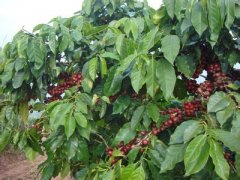
A brief introduction to the flavor, taste and aroma characteristics of Kenyan Jinchu boutique coffee beans
Aromatic, full-bodied, with fruit flavor, taste rich and perfect. Kenyan coffee has a wonderful fruit flavor, tastes like BlackBerry and grapefruit, and is a favorite of many coffee gluttons. This coffee has an excellent medium purity, crisp and refreshing taste. It has a fresh flavor and is most suitable for drinking iced coffee in summer. When tasting this coffee, such as
Coffee Fun Xiamen Cafe Recommended Xiamen Travel Coffee
For coffee shops, some people like its smell, some people are infatuated with its atmosphere. But I love to travel to cafes around the world and feel the deeper taste of cafes. One weekend in April 2015, my photographer friend Button and I went to Xiamen, the coffee capital of China. I heard that there are thousands of cafes in Xiamen. As a fan of cafes, I

A brief introduction to the Market Price of Fine Coffee Bean varieties in Jinchu Valley, Kenya
Internationally, the increase in the number of Kenyan coffee is obvious, from 1969 to 1970, when 800000 bags were exported, to 1985 and 1986, when the output increased to 2 million bags. Now the yield is stable at 1.6 million bags, with an average yield of about 650kg per hectare. Even before coffee prices skyrocketed in recent years, the average price of coffee in Kenya had been rising. Price ratio from 1993 to 1994: 12

A brief introduction to the flavor and aroma characteristics of Kenyan Jinchu boutique coffee beans with sweet green tea
Aromatic, full-bodied, with fruit flavor, taste rich and perfect. Kenyan coffee has a wonderful fruit flavor, tastes like BlackBerry and grapefruit, and is a favorite of many coffee gluttons. This coffee has an excellent medium purity, crisp and refreshing taste. It has a fresh flavor and is most suitable for drinking iced coffee in summer. When tasting this coffee, such as

Rich and perfect taste of Kenya Jinchu boutique coffee beans grinding degree baking degree treatment method simple
SL-28 and SL-34 help Kenyan coffee to form its own unique flavor characteristics and establish a perfect reputation in the coffee industry. Although the yield of SL28 was not as high as expected the copper leaf color and broad bean-shaped beans have great sweetness balance and complex flavor as well as significant citrus and black plum characteristics. While SL34 and SL28 are similar in flavor, except that they are more complex.

Green tea sweet Kenya Kam Chu Valley fine coffee beans cultivation geographical location climate altitude profile
The usual choice of light roasting, but in order to retain the original very rich fruit flavor in the raw beans, we will enter the bean temperature to 210℃, temperature point to maintain at 125℃, into the pot after observing the temperature point after the small fire steam roasting, in 4 minutes and 30 seconds to observe the coffee beans white evenly, and then urge the fire to 5 minutes and 30 seconds to complete dehydration, in 8 minutes to reach 175℃ when the heat is reduced, so that coffee

A brief introduction to the description of the flavor and aroma characteristics of Kenya Jinchu boutique coffee beans with cherry sweetness
Kenya AA coffee beans are adjacent to Ethiopia, the origin of Arabica coffee trees in the north of Kenya, but it was not until the beginning of the 20th century that they began to cultivate coffee. In the 19th century, missionaries introduced Arabica trees from the leaves, but did not plant them in large quantities. It was not until 1893 that coffee was cultivated on a large scale by the introduction of Brazil's ancient bourbon caffeine seeds. That is to say, at present

A brief introduction to the History and Culture of the Origin and Development of Fine Coffee beans in Jinchu Valley, Kenya
Kenya AA coffee beans are adjacent to Ethiopia, the origin of Arabica coffee trees in the north of Kenya, but it was not until the beginning of the 20th century that they began to cultivate coffee. In the 19th century, missionaries introduced Arabica trees from the leaves, but did not plant them in large quantities. It was not until 1893 that coffee was cultivated on a large scale by the introduction of Brazil's ancient bourbon caffeine seeds. That is to say, at present

A brief introduction to the treatment method of grinding degree and baking degree of Kenyan Jinchu Valley boutique coffee beans with sweet cherry
SL-28 and SL-34 help Kenyan coffee to form its own unique flavor characteristics and establish a perfect reputation in the coffee industry. Although the yield of SL28 was not as high as expected the copper leaf color and broad bean-shaped beans have great sweetness balance and complex flavor as well as significant citrus and black plum characteristics. While SL34 and SL28 are similar in flavor, except that they are more complex.

A brief introduction to the planting Market Price of Fine Coffee Bean varieties in Jinchu Valley of Kenya with fresh Flavor
Kenya AA coffee beans are adjacent to Ethiopia, the origin of Arabica coffee trees in the north of Kenya, but it was not until the beginning of the 20th century that they began to engage in coffee cultivation. In the 19th century, missionaries introduced Arabica trees from the leaves, but did not plant them in large quantities. It was not until 1893 that coffee was cultivated on a large scale after the introduction of Brazil's ancient "bourbon" coffee seeds. That is to say,

A brief introduction to the treatment method of grinding degree and baking degree of Kenya Jinchu boutique coffee beans with fresh flavor
There are different flavors of coffee, so you can't drink three or four cups in a row like tea or cola, but the size of a formal coffee cup is just right. The average amount of coffee to drink is 80-100cc. Sometimes if you want to drink three or four cups in a row, you have to dilute the concentration of coffee, or add a lot of milk, but you still have to consider the degree of physical needs to add or decrease coffee.

A brief introduction to the history and culture of the origin and development of Kenyan Jinchu boutique coffee beans with fresh flavor
Kenya AA coffee beans are adjacent to Ethiopia, the origin of Arabica coffee trees in the north of Kenya, but it was not until the beginning of the 20th century that they began to cultivate coffee. In the 19th century, missionaries introduced Arabica trees from the leaves, but did not plant them in large quantities. It was not until 1893 that coffee was cultivated on a large scale by the introduction of Brazil's ancient bourbon caffeine seeds. That is to say, at present

A brief introduction to the treatment method of grinding degree and baking degree of Kenyan Jinchu boutique coffee beans with sweet green tea
We still choose the familiar medium and shallow baking, but in order to retain the very rich fruit flavor in the raw beans, we increase the temperature of the beans to 210 ℃ and keep the temperature at 125 ℃. After entering the pot, we observe the return point and steam the coffee beans over low heat, and observe until the coffee beans whiten evenly at 4 minutes and 30 seconds, then press the fire to complete the dehydration in about 5 minutes and 30 seconds, and then reduce the firepower at 175 ℃ in 8 minutes to make the coffee coffee.

You must see how to open a coffee shop. You must understand!
Exchange of professional baristas Please follow the coffee workshop (Wechat official account cafe_style) how many people want to open a coffee shop, how many? I don't know, but there must be a lot. In the past, I thought so, so I did it, up to now, it has been two years. But there is one question. I always want to ask: what is the charm of cafes? Let's look forward to it so much. Of course, you have to ask first.